

You've pulled a clean Charizard, or you're scrolling a vintage grail online, and all the good stuff seems to be sitting in a hard plastic case with a number stamped on the label. That's a graded Pokémon card, and if you're buying or selling in the hobby with any real money on the line, knowing how grading works is the line between a smart pickup and an expensive lesson.
At its core, grading is a professional company checking your card is genuine, scoring its condition from 1 to 10, and sealing it in a tamper-proof slab. Here's how the whole thing works, who does it, and when it's worth your while.
Quick Answer
- Graded Pokémon cards are authenticated, condition-scored (1–10) and sealed in a protective slab by an independent grader.
- PSA is the most trusted and most-used grader in the Pokémon market. Pokémon is now the single biggest category it grades.
- Every grade comes down to four things: centring, corners, edges and surface.
- Grading adds genuine value and makes a card far easier to sell, but it only pays off above a certain card value.
- You can buy cards that are already slabbed, or send your own raw cards off to be graded.
What "Graded" Actually Means
A raw card is any card that hasn't been through grading. It could be straight out of the pack, out of a binder, or bought loose. A graded card has been sent to a third-party grading company, verified as authentic, assessed for condition, and encapsulated in a sealed case (collectors call it a "slab").
Two things happen inside that process. First is authentication: confirming the card is genuine and hasn't been trimmed, recoloured, or otherwise tampered with. Second is grading: scoring the condition. A card only gets a number once it's passed the authenticity check.
When you buy a slab, you're not squinting at corners under your phone torch, wondering if a $600 Base Set holo is legit. Someone's already done that work and staked their reputation on it.
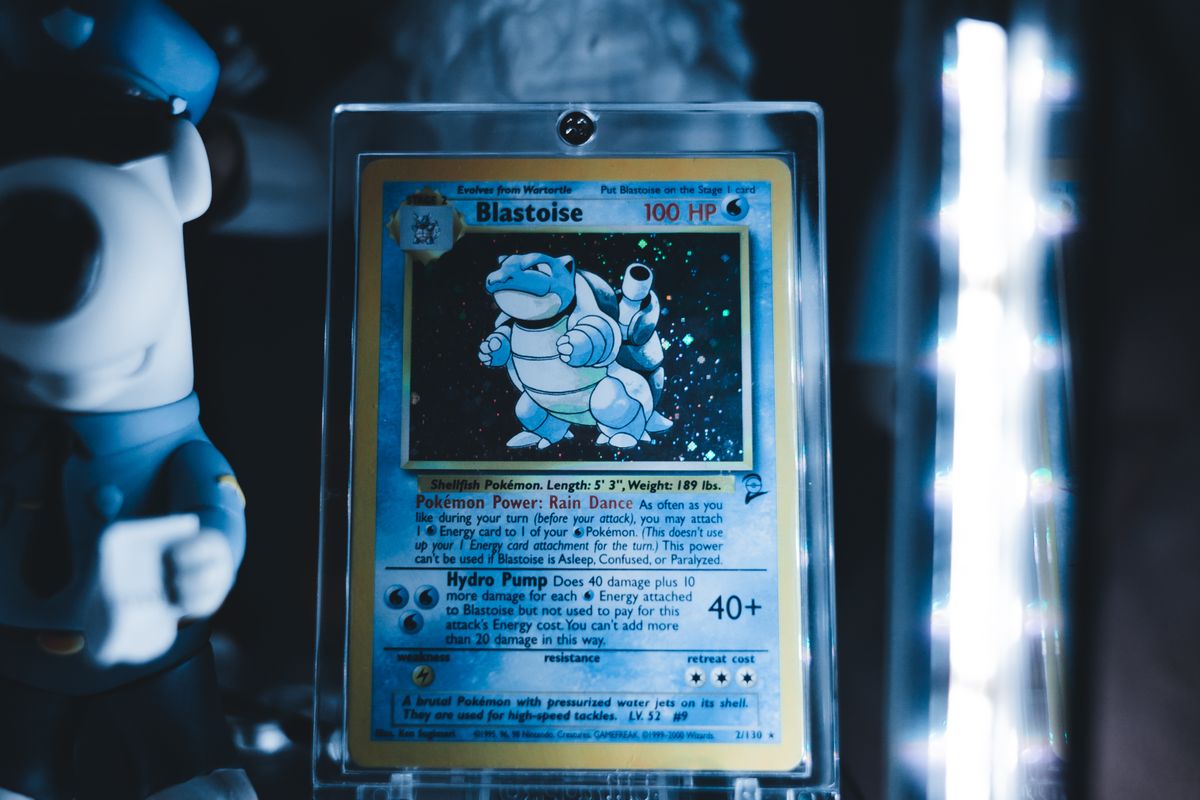
How PSA Grading Works: The 1–10 Scale
PSA (Professional Sports Authenticator) has been grading cards since 1991 and is the name you'll see most in the Pokémon world. Once a card clears authentication, PSA scores it on a 1-to-10 scale, with 10 being the best, then seals it in a tamper-evident case with the grade and a unique certification number printed on the label.
Graders judge four things, and any one of them can cap your grade:
- Centring: how even the borders are, front and back
- Corners: razor sharp, or soft and dinged
- Edges: clean, or showing whitening and nicks
- Surface: scratches, print lines, dents, and how the gloss holds up
Here's the scale in plain collector terms:
- PSA 10 (Gem Mint): near flawless. Looks like it was pulled ten seconds ago. These command the biggest premiums, especially on vintage and chase cards.
- PSA 9 (Mint): one tiny flaw at most, usually invisible without a loupe. The sweet spot for a lot of Aussie collectors chasing quality without the Gem Mint price tag.
- PSA 8 (NM-MT): minor wear that doesn't hurt display quality.
- PSA 7 and below: still authenticated and protected, and often the most affordable way into an otherwise pricey vintage card.
PSA also uses half grades from 1.5 up to 8.5. There's deliberately no 9.5. PSA decided a third mint tier between Mint 9 and Gem Mint 10 wasn't needed.
PSA vs CGC vs BGS
PSA isn't the only grader, just the biggest. CGC (Certified Guaranty Company) is newer, growing fast, and known for sharp-looking labels and competitive modern pricing. BGS (Beckett Grading Services) gives sub-grades for centring, corners, edges and surface, so you see exactly where a card wins or loses. A BGS Black Label 10 (all four sub-grades at 10) is rarer than a PSA 10 and priced accordingly. All three are legit. For Pokémon resale value and liquidity, though, PSA still wears the crown.
Why Grading Matters (The Numbers)
Pokémon has absolutely taken over grading. In the first half of 2025, Pokémon made up 97 of the top 100 most-graded cards by volume at PSA, according to data from tracker GemRate. Across all the major graders in that same six months, 7.2 million TCG and non-sports cards were slabbed; roughly 59% of every card graded, with the category up 70% year on year. PSA itself has confirmed that Pokémon is now the number one category it grades.
So why do collectors bother? Two reasons.
Authenticity. Fakes flood the market, especially on high-value vintage and hyped modern chase cards. A genuine slab with a verifiable cert number takes that risk off the table.
Value and liquidity. A graded card sells faster and usually for more, because the buyer knows exactly what they're getting without handling it.
When Should You Grade (or Buy Graded)?
Grading isn't free, and turnaround can take weeks, so it's not worth doing on everything.
It’s worth grading or buying graded when:
- The card is worth roughly $100+ raw, where authenticity and condition really move the price
- It's vintage or a heavily faked card, where a verified slab is peace of mind
- It's a chase card or personal grail you want protected and display-ready
Probably skip it when:
- It's a cheap, modern, common or bulk card for about $50 or less. The grading fee and postage will eat most of the value
If you're chasing high-grade potential, condition is everything before you submit. A card that's off-centre or edge-worn simply won't hit that Gem Mint number, no matter how rare it is.
Buy Graded Pokémon Cards at Troll Australia
Our range of graded Pokémon cards runs from budget PSA 8–9 modern staples right up to vintage WOTC grails and Japanese exclusives, each authenticated by PSA, CGC, or BGS and priced based on current market data.
Graded Pokémon cards take the guesswork out of a hobby where condition and authenticity decide everything. Learn the 1–10 scale, understand what PSA is judging, and grade the cards that actually justify it. Ready to start? Browse our Pokémon cards, grab a few raw Pokémon singles to chase your own gems, or dig into the Japanese Pokémon cards that dominate the grading charts. And if you're building sealed stock, our Pokémon booster boxes are always worth a look.
Reckon one of your own cards deserves the slab treatment? You can look into our PSA grading service, or just message us at Troll Australia on 0493 475 335 and we'll help you work out whether it's worth sending in.